
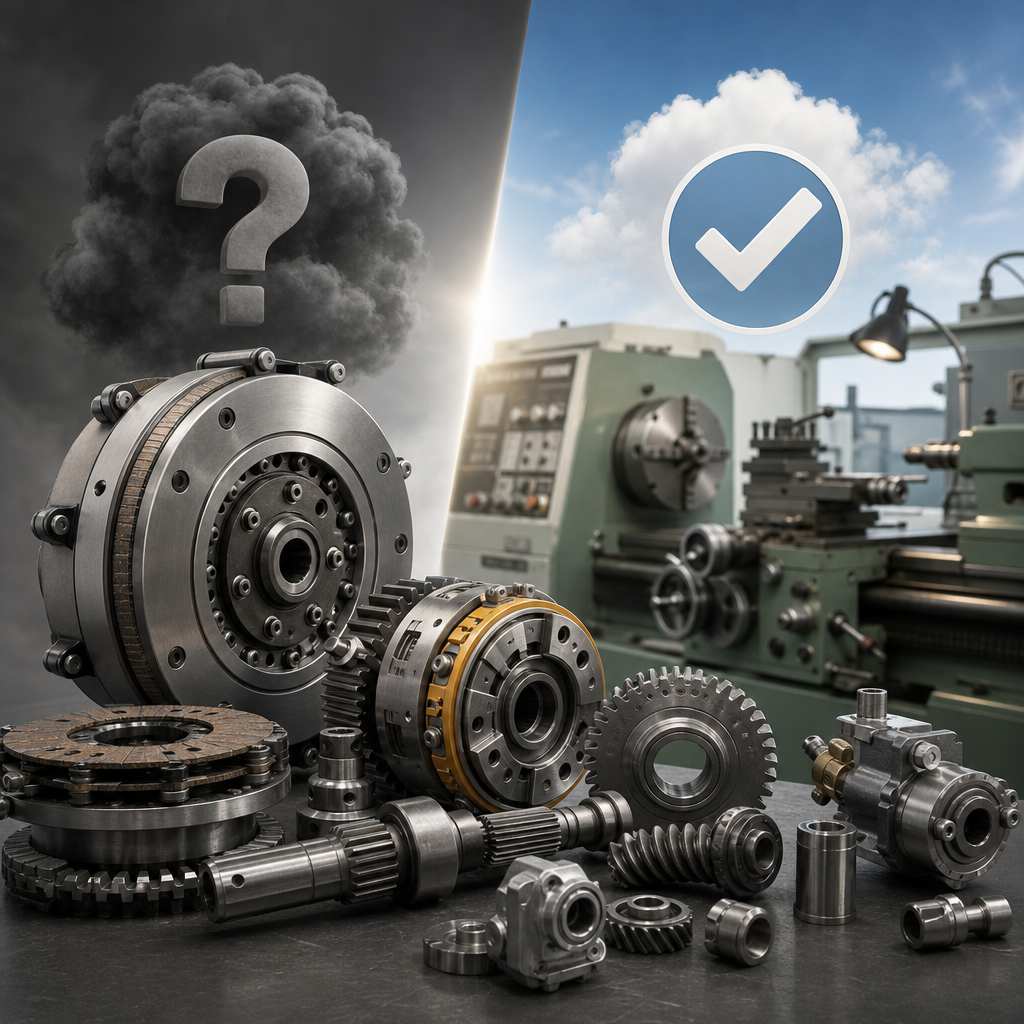
In metalworking and manufacturing sectors, the reliability of machine tool spares directly impacts operational efficiency. Understanding the difference between myths and facts helps prevent unexpected downtime and ensures smooth production processes. This article explores key misconceptions and provides factual insights crucial for maintaining and selecting the right components for legacy and modern machinery.
Key Points
- Most older European machine parts are available for direct replacement.
- Replacing worn sub-components is more cost-effective than full assembly overhauls.
- High-quality spare parts match OEM tolerances and specifications.
Critical Spare Parts in Metalworking Machine Tools
High-quality components play a vital role in keeping manufacturing lines running smoothly. Clutch and brake assemblies form the core of power transmission and control, governing operations such as speed adjustments and emergency stops. Electromagnetic or hydraulic clutches enable seamless control, while mechanical clutches provide durable solutions for heavier applications. Proper selection of these components is essential for reliable operation, particularly in high-stress environments where precision is non-negotiable.
Support for legacy equipment remains a priority in many workshops. Sourcing precision replacement parts for classic European machinery like Heckert or Pilsen ensures operational continuity without investing in entirely new machines. High-quality gears, shafts, and oil pumps sustain drive system integrity, transferring torque efficiently while protecting critical components from premature wear. Maintaining these mechanical systems with accurate, durable machine tool spares preserves the accuracy and repeatability essential in metalworking tasks.
Electrical and accessory components such as brush holders, rectifier blocks, and friction discs are also indispensable. Regular replacement of these consumables prevents breakdowns and keeps the drive and control systems operating optimally. Overall, selecting parts that meet strict metallurgical specifications, including hardness levels and heat treatment, helps maintain high standards of durability and performance.
Maintaining Legacy Versus Modern Machine Tools
Modern machine shops often focus on enhancing their production capacity through up-to-date equipment. However, in many cases, extending the lifespan of existing machinery offers a more economical solution. Replacing worn gears, clutch discs, or hydraulic components in dependable European models sustains their performance and ensures a high return on investment. This approach avoids the costs associated with purchasing entirely new systems, making it a strategic choice for many manufacturers.
Support for older machines is also strategic for minimizing production disruptions. Keeping high-wear spares like friction plates, coil assemblies, or carbon brushes in inventory significantly reduces emergency downtime. Quick sourcing and availability allow for fast repairs, ensuring continuous productivity. Reliable suppliers maintain comprehensive cross-reference catalogues, facilitating the proper replacement of original parts and preventing the need for modifications that could compromise machine accuracy.
Quality and Technical Standards for Replacement Parts
The effectiveness of replacement components depends heavily on material quality and adherence to OEM specifications. Replacement gears and clutch plates must feature material hardness and tolerances aligned with strict standards to handle high torque levels under thermal stress. Precise dimensions regarding shaft diameters, keyways, and spline counts are critical for proper fitment and operational reliability.
Technical cross-referencing is vital for seamless installation. Manufacturers and suppliers ensure that aftermarket parts not only match in size but also in performance parameters such as friction coefficients and heat tolerance. High-precision, OEM-grade parts manufactured to exact specifications guarantee consistent function and longevity, maintaining the accuracy of even the oldest European machine tools.
Myths and Common Errors About Machine Tool Spares
One widespread misconception is that sourcing exact replacement parts for vintage European lathe and milling machines is impossible. In reality, many specialized suppliers provide comprehensive catalogues with cross-referenced components that fit a wide range of legacy brands. This allows workshops to maintain older equipment without sacrificing performance or requiring extensive modifications.
Another myth claims that if a clutch or brake slips, the whole assembly must be replaced. Factually, replacements of consumable parts such as friction discs, brake pads, or coil assemblies can restore full functionality at a fraction of the cost of a complete assembly overhaul. Similarly, the belief that any generic friction disc will do ignores the specifics necessary for handling thermal loads. Friction linings require precise coefficients and oil-groove configurations that generic parts often cannot provide.
Moreover, some assume that mechanical spare parts from third-party suppliers undermine machine accuracy. On the contrary, OEM-grade aftermarket components manufactured with tight tolerances and heat-treatment processes can match original parts perfectly, ensuring ongoing precision and operational life.
Preserve, Repair and Upgrade: Smart Choices for Your Machinery
Ensuring the longevity and efficiency of your machine tools hinges on proactive maintenance and sourcing high-quality replacement parts. Reducing the risk of unexpected breakdowns becomes easier when you regularly inspect wear items and keep a stock of critical spares. Leveraging specialized suppliers for direct-fit parts guarantees compatibility and performance, ultimately saving time and costs. For those looking to keep older machinery running without compromising quality, reliable sourcing offers a strategic advantage and a proven path toward sustained productivity.